


Calligraphy - a brief history of fine writing
What is calligraphy?
Calligraphy is a form of visual art, involving the use of various calligraphic pens, brushes and other materials to recreate and imitating ancient scripts, It can also incorporate digital tools and is considered one of the most modern techniques of artistic creation. Like any work of art, it is created by hand—unique and intimate. Unlike printed text, no two pieces of calligraphy are exactly alike. In the age of digitization and artificial intelligence, calligraphy as a leisure activity offers a creative escape, while at the same time providing creators with digital tools to incorporate this art form and weave it into contemporary design.

When you imitate ornate Celtic script, you are following in the footsteps of ancient scribes whose dream was to create a legacy that will be treasured by generations to come. Learning calligraphy is not only fascinating, it's also a lot of fun and a lot of fun. Calligraphy can be used for lots of interesting projects:
- For decorating walls or other surfaces in the form of inscriptions or calligraphy.
- For creating invitations, greetings, signs, boards and personal messages.
- To add a unique and elegant touch to any gift.
- As a form of self-expression or meditation.
- Calligraphy can also be used to create a computer font - typography.
- Calligraphy can also be digitised and transferred to a wide variety of products.


Calligraphy is the art of writing, which we also call, for short "beauty". The name is derived from Greek and refers to the words κάλλος kallos (beauty) and γραφή graphẽ (writing). It is ancient, a fascinating craftsmanship, which improves concentration and strengthens the ability to visualize, while also presenting an exceptional technical challenge. Calligraphy involves arranging strokes into letters, letters into words, and words into text. Each calligraphic style has its own characteristics, and we learn it by taking into account the rules of each individual font.
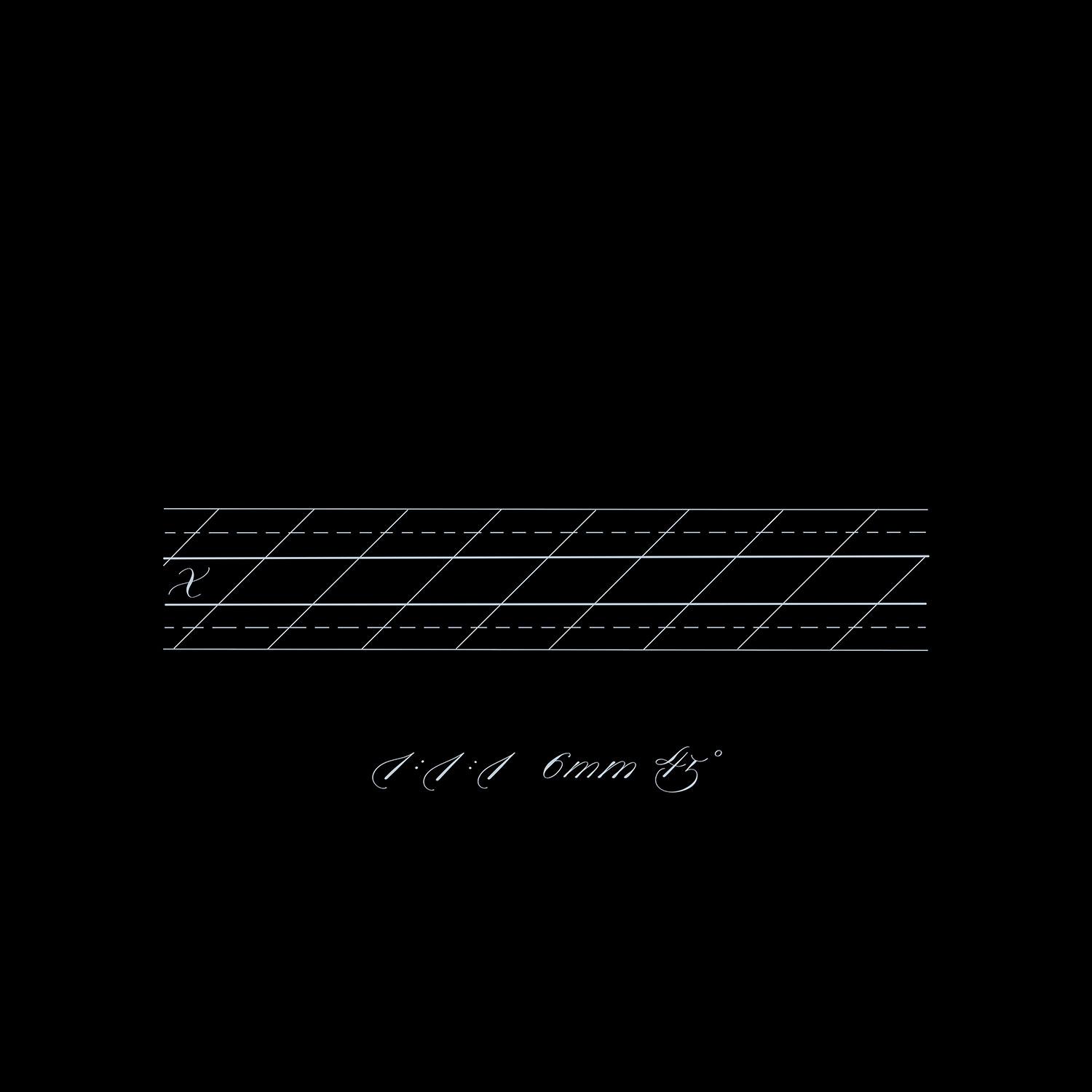
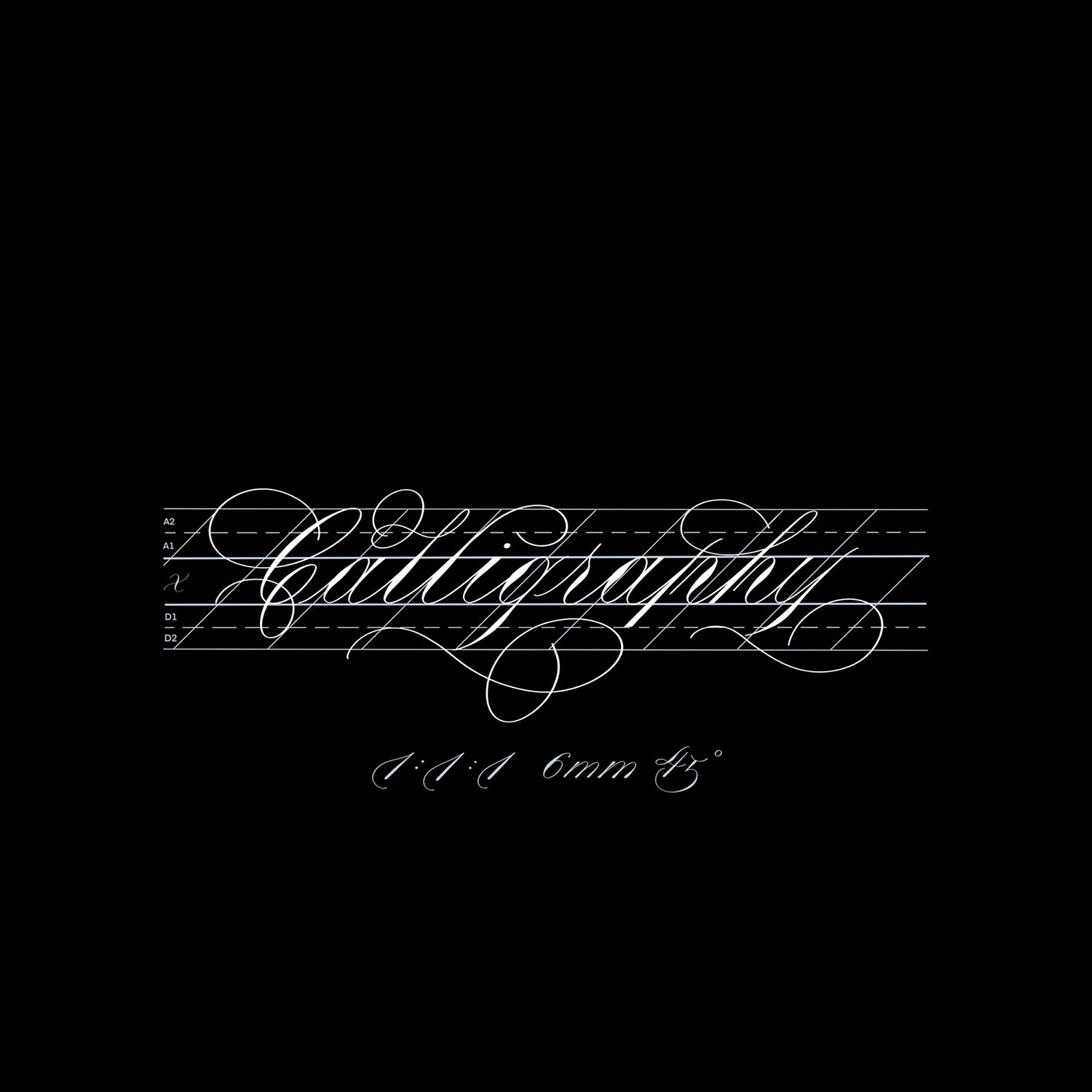
The example below applies to Copperplate font showing how many lines are needed for one line of writing.Calligraphers mark the height, proportions and slant of their lettering for practice. Only by understanding line pens do we know how to use them, buy them or create them through online apps.

To appreciate the letterform as we use it today, we need to understand the origin and evolution of fonts, woven from Sumerian pictograms, Greek hieroglyphs, Chinese characters and also the first alphabets. History of pictorial symbols ˗ pictograms and cave paintings ˗ dates back 20,000 years to the Early Stone Age. The most significant finds are located in the complex the Lascaux underground caves in France and the Altamira cave in Spain.

Calligraphy throughout history
Over the millennia, writing has made it possible to record information, laws, religious texts, knowledge, and personal messages. Calligraphy, however, has added a special attention to form, rhythm, and the relationships between letters.
The development of calligraphy is closely linked to the development of writing systems, tools, and materials. From inscriptions carved into stone to manuscripts on parchment and paper, different cultures have developed their own styles of writing.
Today, we associate calligraphy primarily with the art of beautiful writing, but many historical scripts arose from entirely practical needs: legibility, speed of writing, clarity, and the efficient use of space.
Various Traditions of Calligraphy
Calligraphy is not limited to the Latin alphabet. It has developed in various cultures, each of which has developed its own distinctive scripts, tools, and writing styles.
Western Calligraphic Scripts
Throughout European history, numerous writing systems have developed, which we calligraphers still study and use today:
- Roman Capitals
- Uncial and Half-Uncial
- Carolingian Minuscule
- Gothic (Gothic Scripts or Blackletter)
- Italics
- Copperplate
- Spencerian
These scripts developed during various historical periods. Some were intended for monumental inscriptions, while others were used for copying books, official documents, or everyday correspondence.
Other Calligraphic Traditions
In addition to Latin calligraphy, we are also familiar with the rich traditions of Greek, Hebrew, Arabic, Chinese, and Japanese calligraphy.
The Greek Alphabet It developed around the 8th century B.C. Over the centuries, the lowercase forms we know today evolved from the early forms of uppercase letters.
Cyrillic It developed in the late 9th and 10th centuries within the Slavic cultural sphere, particularly in the First Bulgarian Empire, based on the Greek alphabet and the Slavic literary tradition.
Hebrew script It has its roots in the first millennium B.C., and the current square form of Hebrew letters developed under the influence of the Aramaic script.
Arabic script It evolved from older Semitic writing traditions, primarily through the Nabataean script. It is particularly recognizable for its connected letters and rich tradition of calligraphic design.
Chinese calligraphy It is one of the oldest calligraphic traditions and an important part of China’s cultural and artistic heritage. Its traditional tool is the brush, which the calligrapher uses to form Chinese characters by varying the pressure, speed, and direction of the brushstrokes. In this process, it is not only the correct form of the characters that matters, but also the rhythm, balance, and expressiveness of the strokes.
Throughout history, five main styles of Chinese calligraphy have developed: seal script, clerical script, regular script, running script, and cursive script. They differ in the shape of the characters, the method of writing, and the degree of stylization. Chinese calligraphy is thus not merely a means of writing the language, but a distinct visual art form.
You can read more about its development and individual styles in A Guide to Chinese Calligraphy. Japanese calligraphy (shodō) developed under its influence, but it has also developed its own stylistic characteristics and uses various types of characters.
In the following section, we will focus on Western calligraphy, particularly the development of Latin scripts, which remain an important part of calligraphic practice and instruction to this day.

Western Calligraphy - Western Calligraphy
It is the calligraphy of the Latin writing system and, to a lesser extent, the Greek and Cyrillic writing systems. Hundreds of thousands of manuscripts were produced in the Middle Ages: many were illuminated - decorated with paintings of animals and enriched with gold.
Christian churches have encouraged the development of writing through the prolific copying of the Bible, especially the New Testament and other sacred texts. Monks in the British Isles adapted the Late Roman script Uncialo to develop a unique script called "Celtic" or "Insular", meaning "of the islands". From the seventh to the ninth centuries, Celtic illuminated manuscripts dominated northern Europe, exemplified by the 'Lindisfarne Gospel' and the Book of Kells.
1. Unciala
It developed around the fourth century, or even a little earlier. She is a majuscule, which means that it is composed entirely of capital letters or capitals.
The earliest versions could be written quickly, but later versions, written between the seventh and ninth centuries, became more complex and required twists and turns of the pen, which slowed down the writing process somewhat while also requiring a bit more concentration.
This font is somewhat flat-round and beautifully pressed, so it can be nicely complemented with a versal or ornate initial to develop the texture of the calligraphic work. Suitable for longer texts where no detailed reading of the text is required and the work is mainly of a decorative naturebut can also be used on receipts, certificates and thank-you notes to print the recipient's name and achieve a beautiful contrast even on pre-printed documents.

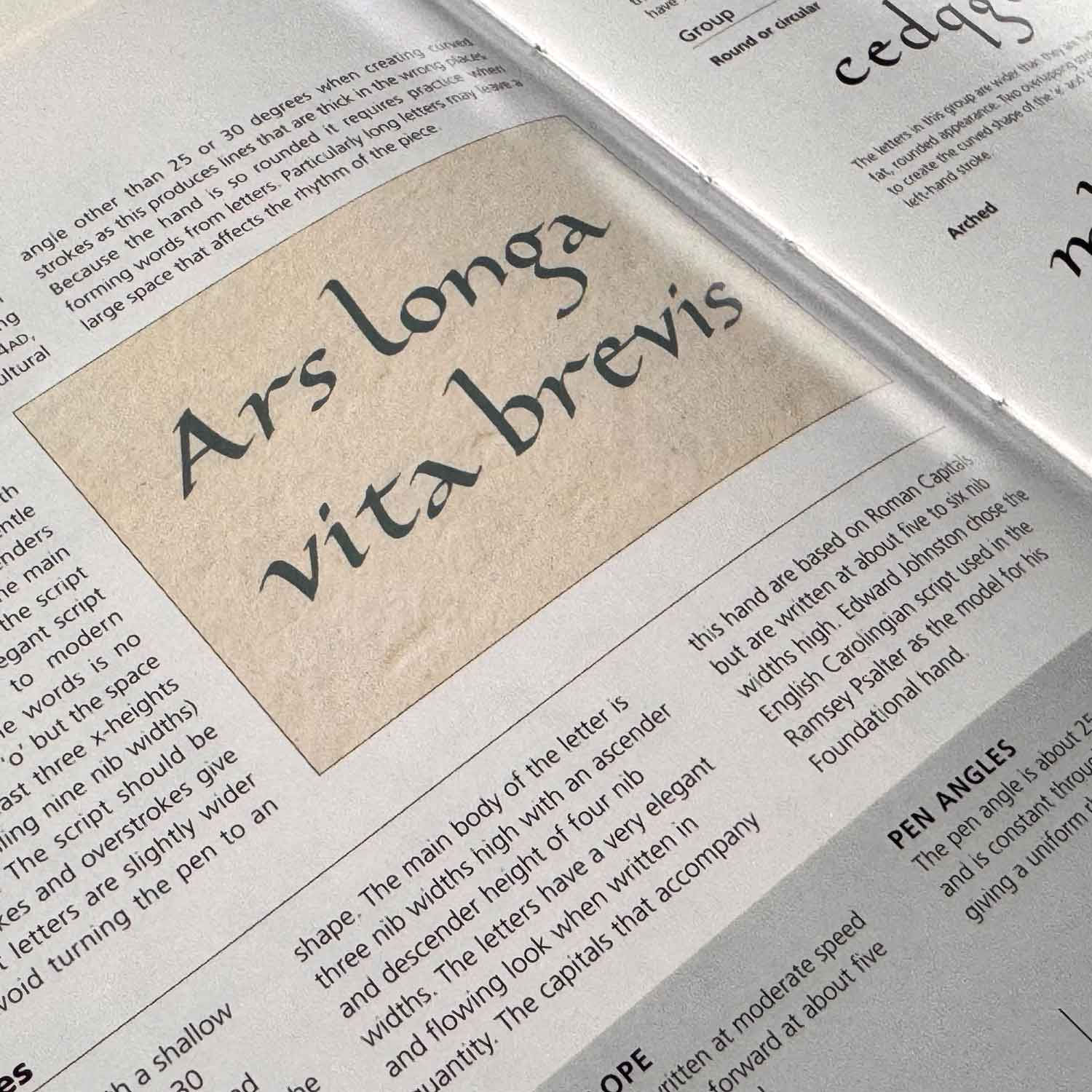
2. Karolinska minuscule
Carolingian minuscule developed in the second half of the 8th century and spread throughout much of Western Europe during the Carolingian Reform. Charlemagne He supported educational reforms, the transcription of books, and the standardization of written culture. The scholar Alcuin of York played an important role in this, but he did not create the Carolingian minuscule on his own. The script became popular because of its clear, rounded, and relatively uniform letterforms, as well as its good legibility.
It later had a significant influence on the development of humanistic minuscule and today's lowercase printed letters.
It was the first widely used and recognised minuscule. It is slightly round and the font is a little wider. The words have energy and qualities italics. It is elegant and fluid. The capital letters accompanying the minuscule are borrowed from the Roman capitals, but are 5 to 5 pen widths high... For a better rhythm of the product, it can be complemented with the Roman capital and the is also easy to read.
3. Gothic and its Rotunda version
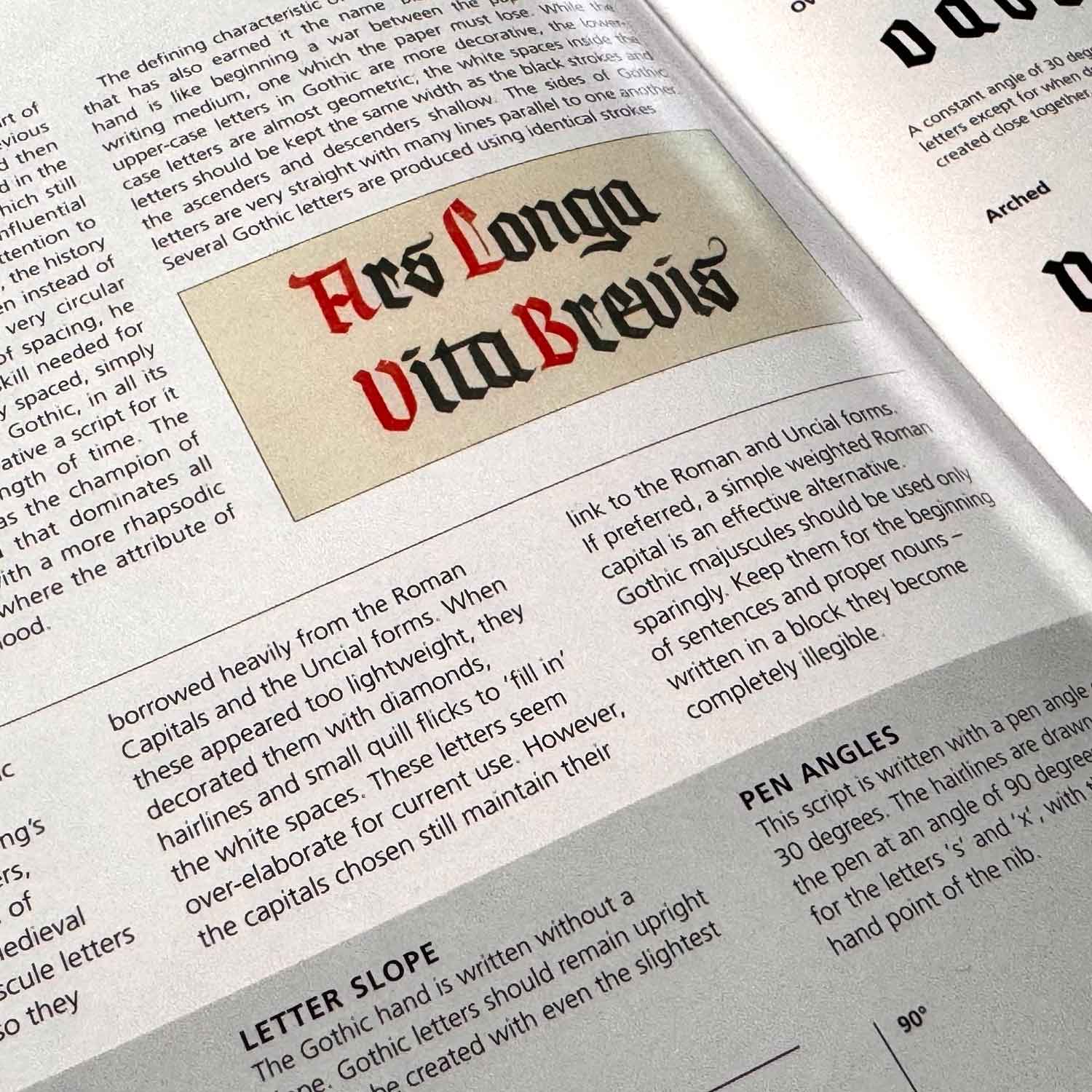
Gothic scripts gradually evolved from Carolingian minuscule in the 12th century. They are characterized by more angular, upright, and often compressed letterforms.
In Northern Europe, it has become particularly widespread texture (Textualis), while in Italy and parts of southern Europe, a slightly more rounded version was popular rotunda.
Variations of Gothic scripts were used for manuscripts, religious texts, and later also as a model for early printed typefaces.
The wide, angular typeface has become valued for its visual appeal. The Gothic script appeals in all its variations, as it has a strong decorative impression. It interacts beautifully with the delicate and legible italics where the element of illegibility is dissolved.
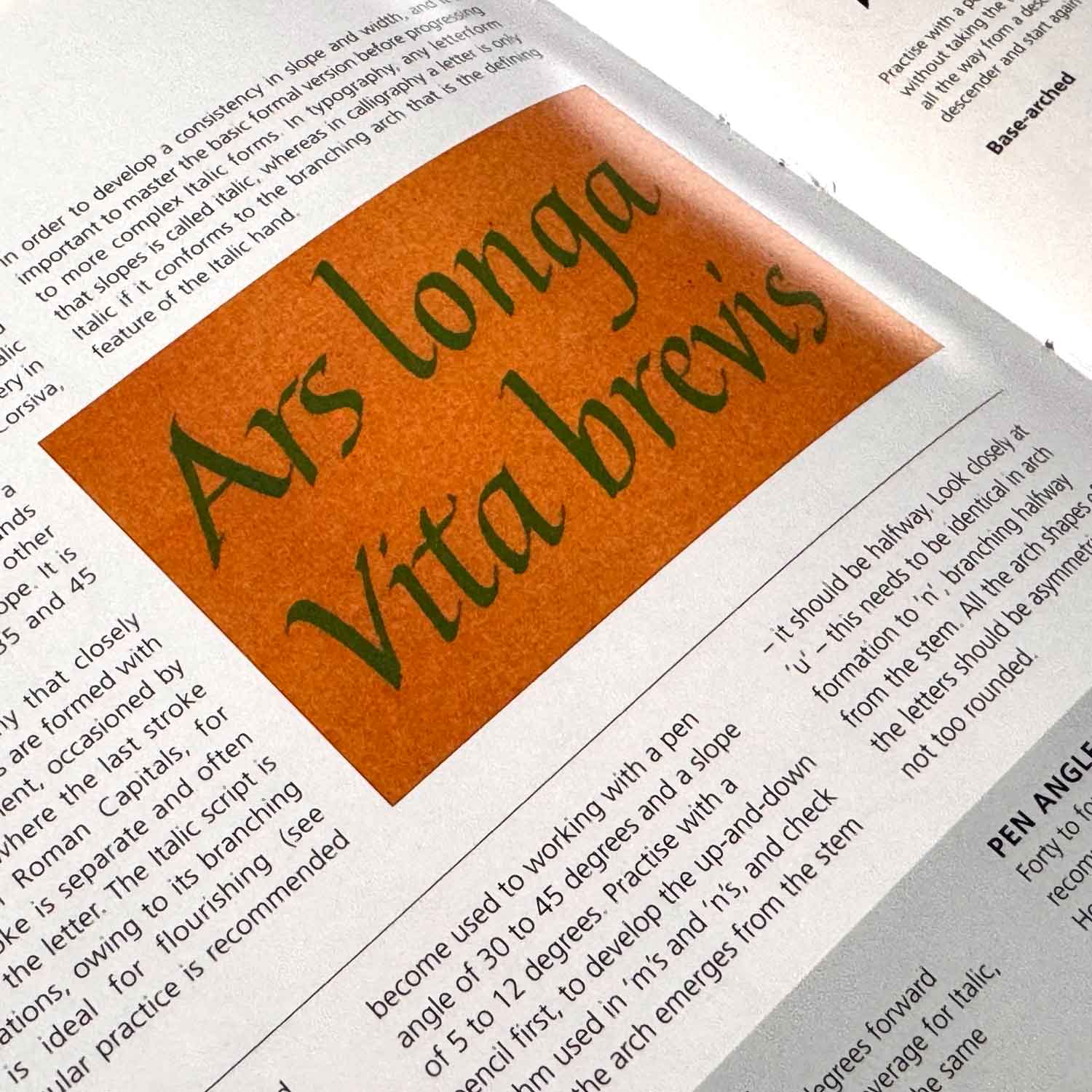
4. Italics
Italic has its roots in 15th-century Renaissance Italy. It evolved from humanist minuscule, which was modeled after Carolingian manuscripts. Among the important early designers of humanist cursive was Niccolò de’ Niccoli, who developed a more fluid and slightly slanted style of writing. In the 16th century, Italian master scribes, including Ludovico degli Arrighi, refined the script. Thanks to its legibility, elegance, and relatively fluid style, Italic has remained popular to this day.
Specializing in quotes, wedding invitations, artistic calligraphy, and handwriting improvement. It is very legible and fits nicely with the Copperplate font on certificates or awards.
5. Copperplate
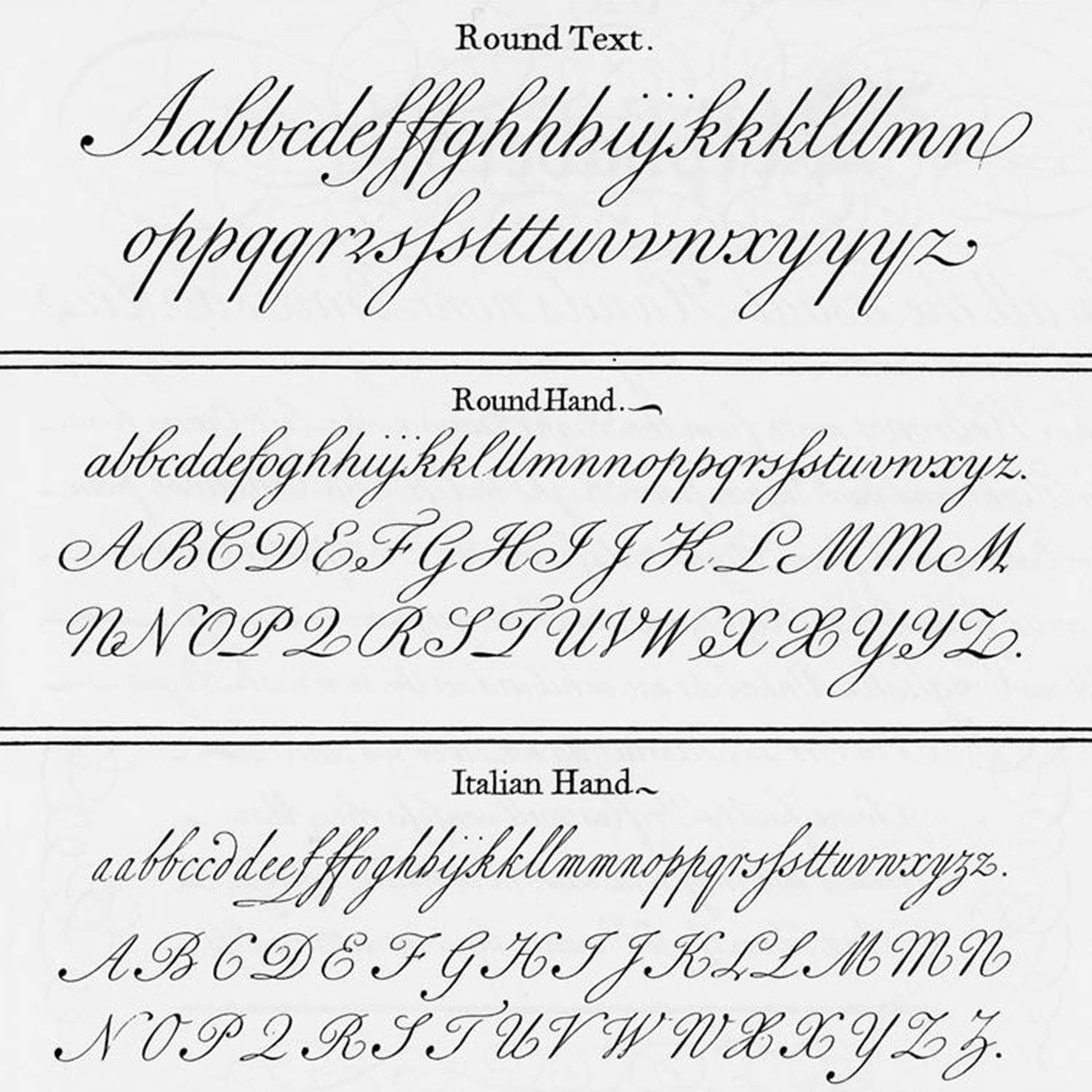
Today, the term "Copperplate" is used to refer to a group of related calligraphic scripts, za katere so značilni izraziti kontrasti med tankimi in debelimi potezami, natančne črkovne oblike in pogosto desni naklon.
Njihove zgodovinske korenine segajo v evropske pisarske tradicije 17. in 18. stoletja, posebej v angleško pisavo Round Hand. Ime Copperplate je povezano z bakroreznimi ploščami, na katerih so bile objavljene reprodukcije mojstrskih pisav.
V sodobni kaligrafiji pod tem imenom pogosto srečamo tudi Engrosser’s Script oziroma Engraver’s Script, vendar teh izrazov ne smemo povsem enačiti. Prav tako je pomembno razlikovati Copperplate od pisave Spencerian, ki se je razvila pozneje v Združenih državah Amerike.
6. Spencerian
Pisavo Spencerian je v prvi polovici 19. stoletja razvil ameriški učitelj pisanja Platt Rogers Spencer (1800–1864). Njegova metoda je temeljila na tekočih, ritmičnih gibih in povezovanju osnovnih potez v črke. Odlikujejo jo nežne ovalne oblike, tanke povezovalne poteze in premišljeno senčenje posameznih delov črk.
Spencerian je postal eden najvplivnejših ameriških sistemov lepopisja, zlasti v poslovnem dopisovanju in šolskem izobraževanju. Po Spencerjevi smrti so njegovo metodo uspešno širili njegovi sinovi. Konec 19. in v začetku 20. stoletja so jo pri vsakdanjem pisanju postopoma nadomeščale preprostejše metode, med njimi Palmerjeva.
Why calligraphers switched from Round Hand at Copperplate?
Pisava, ki jo danes pogosto imenujemo Copperplate, je bila v 17. in 18. stoletju poznana predvsem kot English Round Hand. Angleški mojstri pisanja so jo razvijali in širili s priročniki, v katerih so bili vzorci pisav reproducirani z graviranjem v bakrene plošče.
Prav od tod izvira povezava z imenom Copperplate. Vendar to ni bilo prvotno ime pisave. V znamenitem delu The Universal Penman Georgea Bickhama iz 18. stoletja najdemo poimenovanja, kot so Round Hand, Round Text and Italian Hand.
V začetku 20. stoletja je Edward Johnston pomembno vplival na preporod zahodne kaligrafije. Njegova Foundational Hand, zasnovana na srednjeveških rokopisnih zgledih, je bila namenjena pisanju s širokim peresom in ni neposredna naslednica angleške Round Hand.
V tem obdobju se je spreminjal tudi odnos do starejših pisav. Johnston in drugi zagovorniki kaligrafskega preporoda so večjo pozornost namenjali neposrednemu pisanju in zgodovinskim rokopisnim zgledom. Nekateri so bili kritični do pisav, ki so jih poznali predvsem iz graviranih reprodukcij. Izraz Copperplate je zato v določenih kaligrafskih krogih dobil tudi nekoliko slabšalen prizvok.
Danes se je ime Copperplate uveljavilo kot širše poimenovanje za sorodne formalne pisave s koničastim peresom, čeprav med njimi obstajajo pomembne zgodovinske in oblikovne razlike.
Ne glede na poimenovanje ostajajo te pisave priljubljene zaradi svoje elegance, izrazitega kontrasta potez in prefinjenih črkovnih oblik. Danes jih povezujemo z nostalgijo in romantiko, zato še posebej lepo pridejo do izraza na poročnih vabilih, zaobljubah, osebnih pismih, izpisih ljubezenskih verzov in elegantno izpisanih imenih, ki krasijo namizne pogrinjke.

How can calligraphy be used today?
S Calligraphers it's like with poets. If poets are craftsmen who forge beautiful verses out of verbal material, providing a pleasant musical accompaniment, then calligraphers add structure to these verses. And so the verses, created by hand, suddenly are adorned with an almost fairy-tale beauty.
Contemporary calligraphy is used in different ways today. It is excellent for wedding invitations, business cards, or even as an art form. Some use it for personalisation of gifts, greetings or also corporate gifts. With calligraphy, some they write on naked bodies, others decorate again the whole building. Our calligraphy also adorned a real cake, engraved make a great gift and can be found in the regular available at.
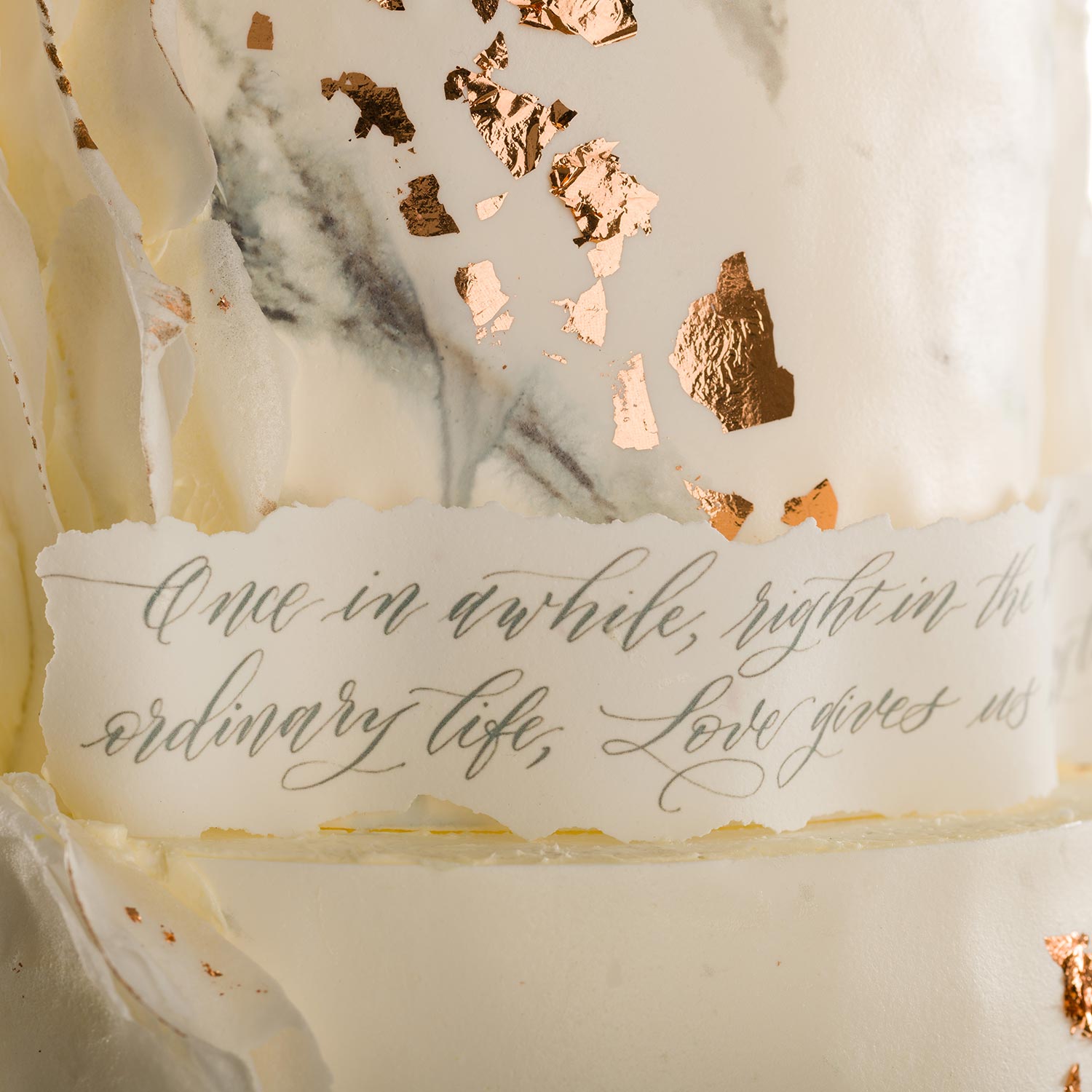
Obstaja veliko vrst contemporary calligraphy. Some artists use traditional calligraphy pens on paper while others use digital tools. Handwritten calligraphy is also now often digitised and as such can be used for large print runs or promotional products without losing its uniqueness.
One popular use of modern calligraphy is creating wedding invitations, inscriptions or monograms. Calligraphy can also be used for branding purposes. Many companies use calligraphy to create logos and other materials. One of trend-setting procedures, who are skilled in calligraphy, is engraving. Engraving is the form of permanent decoration of the product and sculpting the design into the surface itself.
Modern calligraphy can be used in many different ways. Whether you are looking for a unique way to add a personal touch to your materials or want to create a beautiful piece of art, modern calligraphy is perfect.
Calligraphy at a wedding
Calligraphic details can adorn envelope, invitations, menus, seating, wedding signboards, mirrors with guests' names, table numbers and thank-you notes. Calligraphy can be added to your wedding stationery to add an elegant and personal touch to your event. For example, couples can choose to have their names printed in real calligraphy on their invitations. So connect modern technology with ancient art and create something extraordinary.
Why is calligraphy so expensive?
There are several reasons why calligraphy is more expensive than other types of printed matter.
First, tools, required for calligraphy are specialised and much more expensive than a regular fountain pen or ballpoint pen.
Secondly, calligraphy takes much longer to produce than normal writing, so the cost is higher. Learning calligraphy is time-consuming and demanding. It requires a lot of perseverance and the positive results may not be immediate if it is not practised regularly.
You know what they say: "Practice makes perfect, if perfect makes perfect."
After all, it is a very specialised skill that fewer and fewer people know, as even primary schools have long since abandoned the subject of beauty.
With growth wedding industries interest in modern calligraphy. The term modern calligraphy je mišljen stil kaligrafije, ki ne sledi temeljnim pravilom tradicionalnih kaligrafskih pisavsuch as Copperplate, Spencerian, Italic, Blackletter, etc. Modern calligraphy is based on certain principles of traditional calligraphy, but a modern style really gives you more creative freedom. It is definitely necessary to master the rules of a particular script first, and then to modernise the script a little, then to develop a unique style of your own.
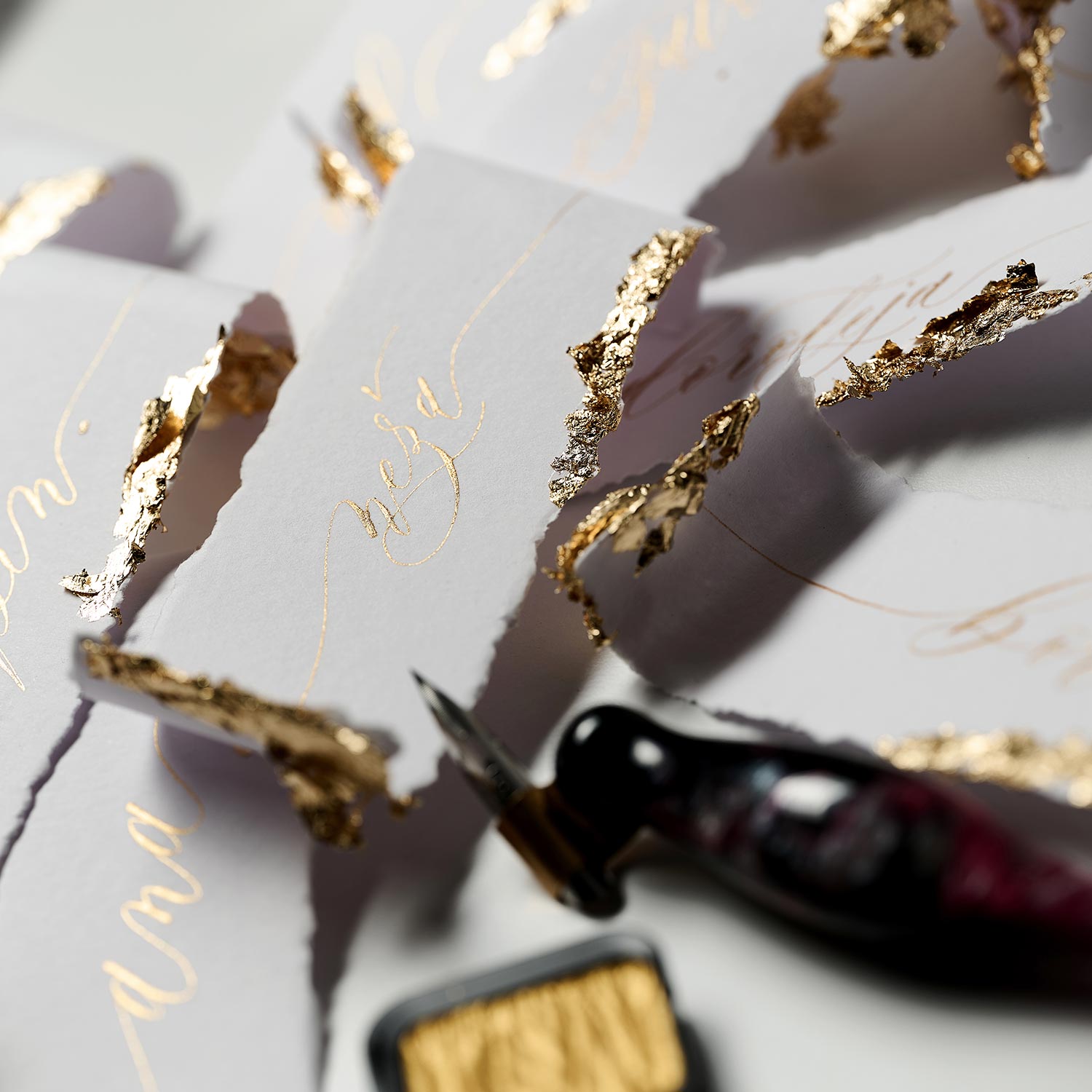
Calligraphy is also combined with other artistic styles, often including gilding or gilding. Gilding with real gold leaf is a demanding process and is suitable for longer texts that adorn walls.
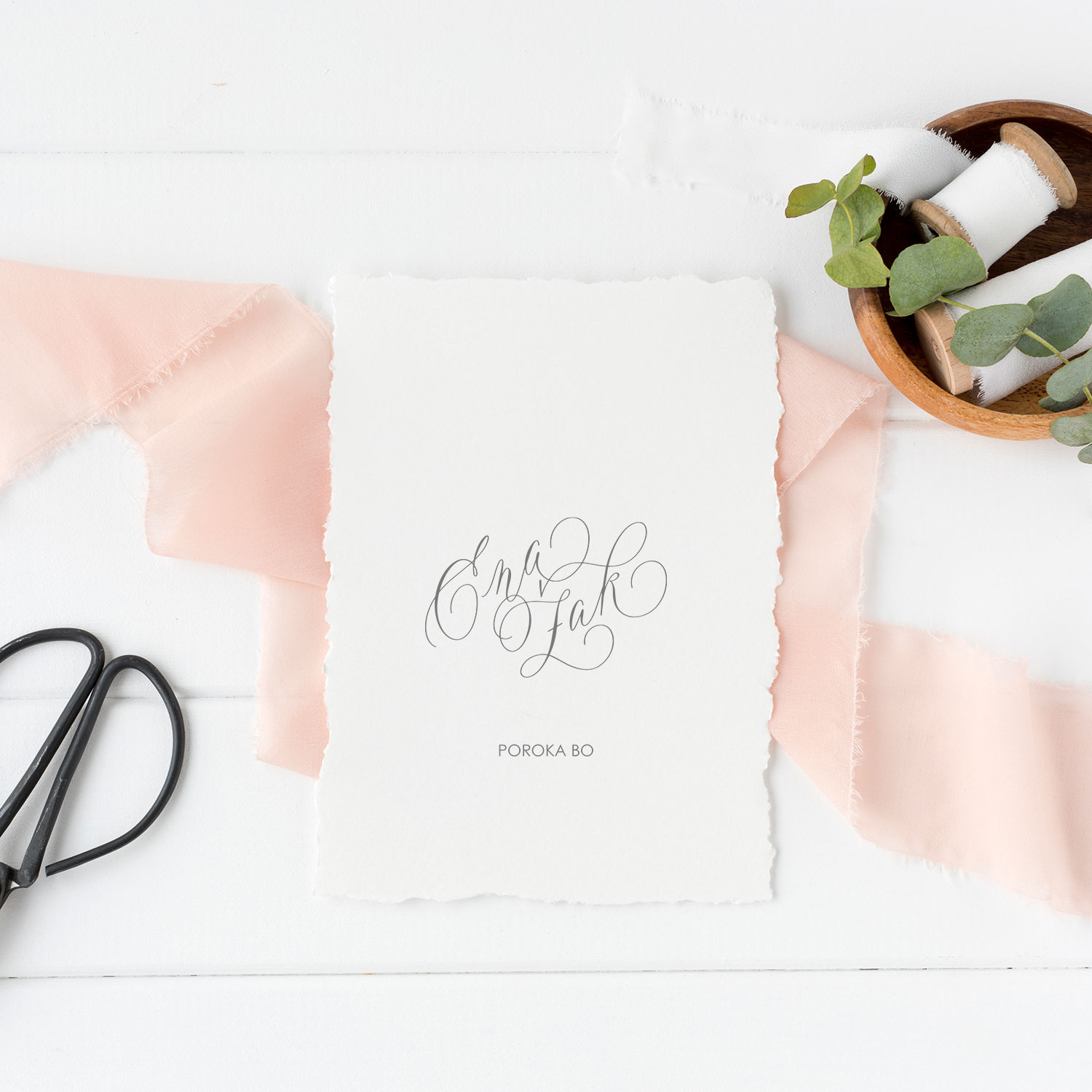
Wedding stationery is at its best when it combines legible typography with the addition of modern calligraphy to create the names of the wedding couple. Calligraphy and visualisation by Zlatka Trstenjak Rampre
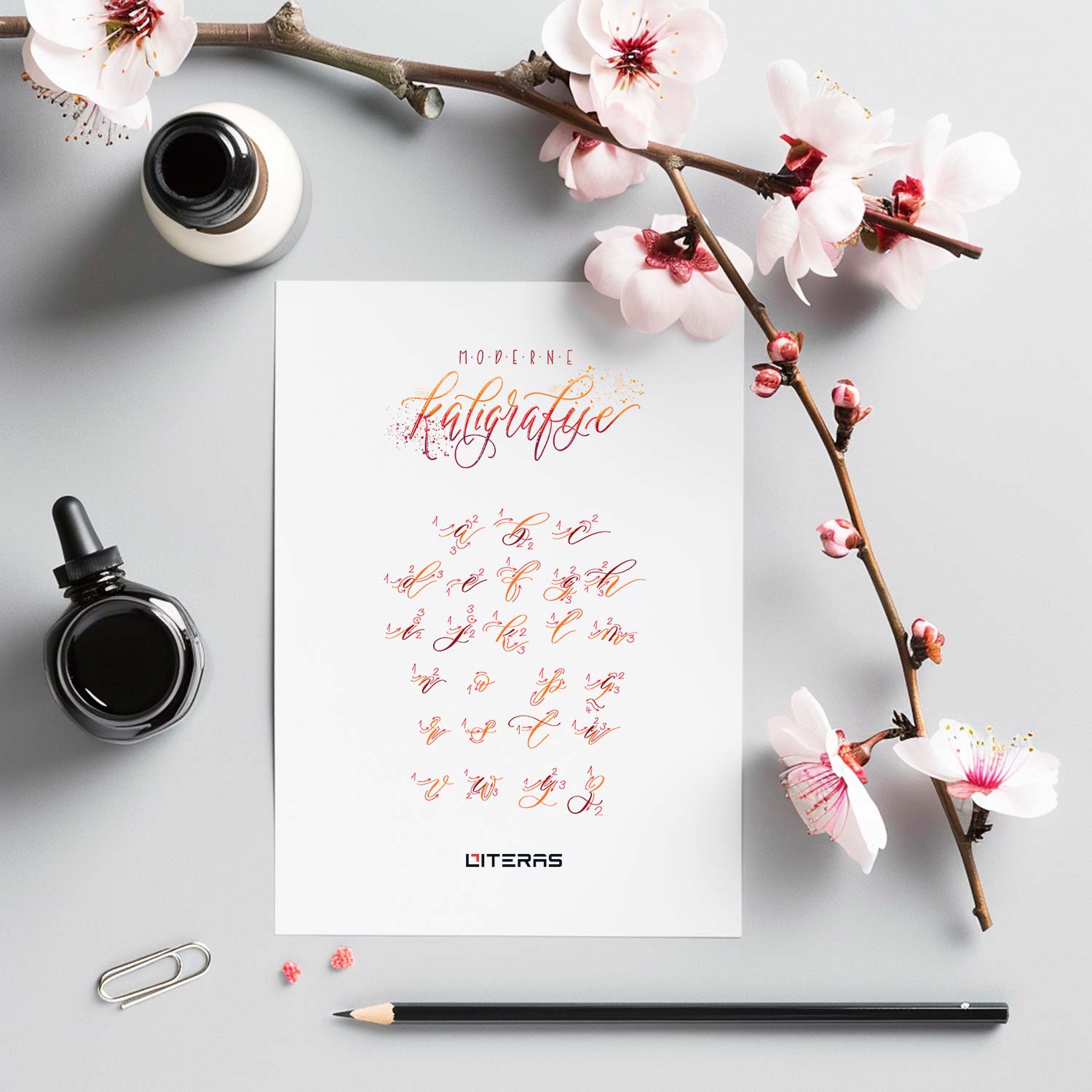 Modern calligraphy with arrows to help you write. Calligraphy and visualisation by Zlatka Trstenjak Rampre

Sources:
Drogin, M. (2015). Medieval calligraphy: Its history and technique. Dover Publications.
Mehigan, J. (2006). Mastering the art of calligraphy. Anness Publishing.
Ralph, C. (2006). The complete guide to calligraphy. CICO Books.
Ralph, C. (2006). The Complete guide to Calligraphy. London, England.
Drogin, M.(2015). Medieval Calligraphy, Its history and Technique. New Jersey, ZDA: Library of Congress Cataloging-in-Publication Data.
Mehigan, J. (2006). Mastering the art of Calligraphy. Annes Publishing Ltd.
Gilderdale, P. (1999). The great copperplate myth. Writing Calligraphy. https://www.writingcalligraphy.com/articles/the-great-copperplate-myth
Heidelberg University. (2013, 9. januar). Caroline minuscule predates Charlemagne. https://www.uni-heidelberg.de/presse/news2013/pm20130109_minuskel_en.html
Society for Italic Handwriting. (b. d.). History. https://www.italic-handwriting.org/history
International Association of Master Penmen, Engrossers and Teachers of Handwriting. (b. d.). IAMPETH. https://www.iampeth.com/



No Comments